Vitalik Buterin Introduces AI-Powered Stewards to Reinvent DAO Governance
Vitalik Buterin introduces AI-powered stewards to revolutionize DAO governance, solving voter apathy, enhancing transparency, and empowering decentralized groups.
What to Know
-
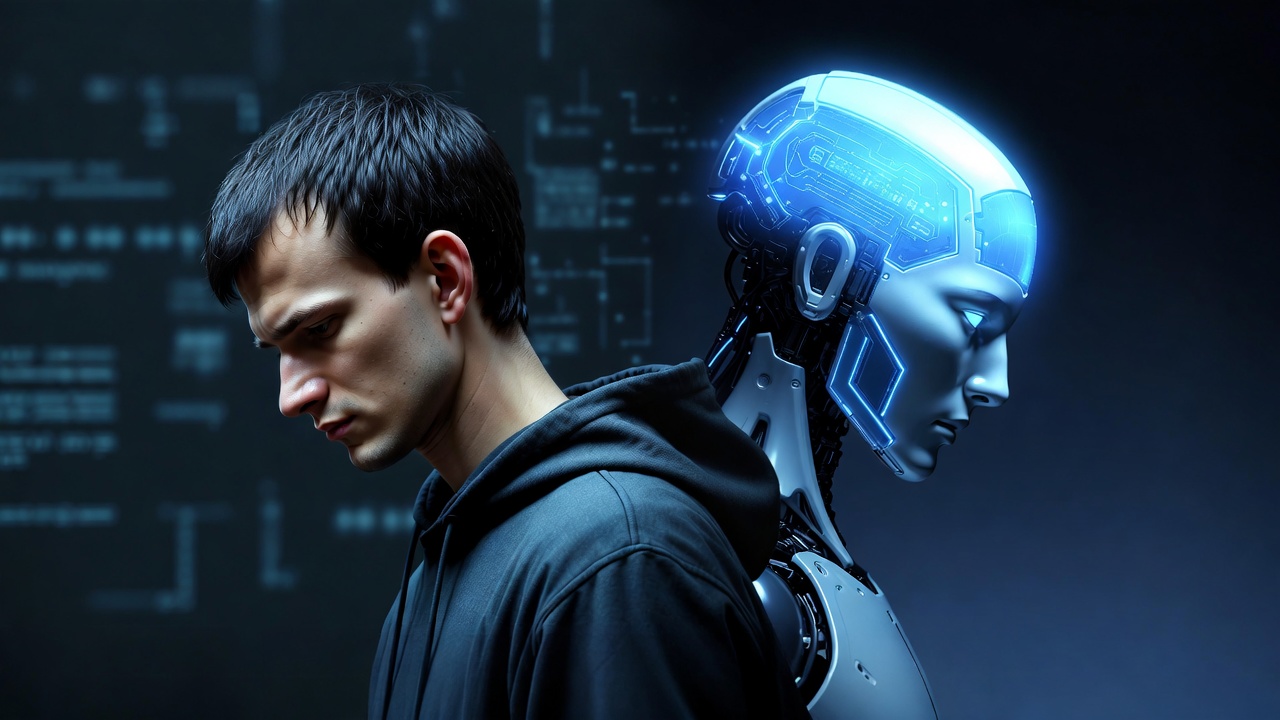
Vitalik Buterin suggests using personalized AI models trained on an individual’s values and preferences to automatically vote on thousands of DAO proposals. The goal is to solve low voter turnout and reduce excessive power being delegated to large token holders.
-
The proposed system would rely on zero-knowledge proofs and secure technologies such as multi-party computation (MPC) and trusted execution environments (TEEs) to safeguard voter identity and sensitive data, while minimizing risks of coercion or bribery.
-
Prediction markets would help surface high-quality proposals and discourage spam. Meanwhile, AI agents would filter routine decisions and only escalate important or controversial issues for human oversight, streamlining overall DAO governance.
Ever been in a group chat trying to decide where to go for dinner? It’s chaos. Now, imagine that group has a shared bank account with a million dollars. The arguments suddenly get a lot more serious, and making a fair decision becomes incredibly difficult for everyone involved.
This exact problem—how large online groups can manage shared goals and money without a single boss—is what led to the creation of DAOs (Decentralized Autonomous Organizations). Think of them as internet-native clubs where the rules are written into the software and members vote on decisions. The idea comes from a digital world pioneered by thinkers like Vitalik Buterin, the creator of the influential tech platform Ethereum.
But in practice, pure democracy at scale can be messy. How can hundreds or thousands of people stay informed enough to vote on every little detail? This challenge of solving DAO voter apathy with technology is a major hurdle. To address this, Buterin has introduced a new vision for AI-powered “stewards” designed to help these groups function more effectively.
This guide breaks down one of the most exciting ideas in tech today: AI helpers designed to streamline how online groups collaborate. The concept, introduced by Buterin, could reinvent DAO governance and change the future of how we all work together online.
What Is a DAO? The Internet's Answer to a Leaderless Club
A DAO—short for Decentralized Autonomous Organization—is an internet-native club with a shared bank account. It’s a collective of people who gather online for a common purpose, whether that’s investing in projects, managing a game, or funding a cause.
The big difference from any club you've been in is that a DAO has no single leader. There’s no president, CEO, or treasurer who can act alone. Instead, the rules for how the group operates and spends its money are written into computer code. This code acts like a digital constitution that everyone agrees to follow, and it runs on a secure, shared system like Ethereum.
This structure is designed to create radical transparency. Every member can see where the money is, and all major decisions are made through a formal voting process. Want to fund a new proposal? The group votes. Need to change one of the rules? The group votes on that, too. It ensures that power rests with the members themselves, not with a single authority figure.
In theory, this creates a perfectly fair, democratic way to collaborate online. A DAO could be a charity where donors vote directly on which projects get funded, or a group of artists who co-own and manage a digital gallery. The idea is to give everyone a voice and a stake in the outcome. But what happens when that group grows to thousands, or even millions, of people?
The Hidden Flaw in DAOs: Why "Pure Democracy" Gets Messy
The idea of a leaderless club where everyone gets an equal say sounds like a perfect system. But in practice, as DAOs grow from a dozen friends into global communities of thousands, that digital democracy often grinds to a halt. It turns out that managing a large group without a boss introduces its own set of very human, and very frustrating, challenges.
These operational headaches usually boil down to a few key issues. Imagine trying to stay on top of hundreds of detailed proposals every month—it’s a recipe for burnout. This leads directly to the core problems DAOs face:
-
Information Overload: There are simply too many proposals, debates, and documents for the average member to read and understand.
-
Low Participation: Faced with this mountain of information, most members disengage. Voter turnout can often drop below 5%, a phenomenon known as voter apathy.
-
Slow Decisions: With endless debate and low participation, making even simple decisions can take weeks or months.
This creates a serious paradox. A system designed to give everyone a voice can accidentally end up being run by the tiny fraction of members who have the time and energy to stay involved. The most important decisions might be made by a small, highly-engaged minority, which risks undermining the entire purpose of a decentralized organization.
Solving this puzzle—how to maintain the fairness of a DAO while making it efficient and engaging for everyone—is a major hurdle. It’s this very challenge that has prompted innovators like Vitalik Buterin to explore a surprising new tool to help: artificial intelligence.
Vitalik's Solution: What Exactly Are AI "Stewards"?
So how do you fix the democratic chaos of a growing DAO? Vitalik Buterin’s proposed answer isn’t more rules or endless meetings, but a smart assistant he calls an "AI Steward." Forget the sci-fi image of a robot overlord; think of this more like a super-intelligent, tireless secretary that works for the entire group, helping everyone stay on the same page.
Instead of forcing each member to read a dense, 50-page proposal, the AI Steward can generate a simple, one-paragraph summary. It acts as an impartial fact-checker, automatically scanning a new suggestion to see if it contradicts a past decision or violates one of the group’s founding principles. Its goal is to do the heavy lifting of processing information, a task that often burns out human volunteers.
The steward can also highlight parts of a proposal that strongly align with the community’s stated goals, or flag sections that seem inconsistent. Crucially, in Buterin’s vision, the AI has no vote. It cannot approve or deny anything on its own. Its only job is to present clear, objective information so that the human members can make smarter, faster, and more confident decisions.
The AI Steward isn't about replacing people, but empowering them. It’s a tool designed to cut through the noise and give every member the context they need to participate meaningfully, without having to make it a full-time job. It transforms governance from an overwhelming chore into a clear choice.
How AI Stewards Work: A Real-World Scenario
To understand the impact, let's imagine a DAO set up to manage a community garden, funded by a shared digital wallet. One day, a member submits a proposal to spend a large portion of the funds on an elaborate, decorative fountain. For the hundreds of members, this is a significant and potentially divisive decision.
Instead of sparking a chaotic debate in a group chat, the proposal first goes to the AI Steward. The AI immediately analyzes it and provides a simple summary for all members. But it does more than that. It scans the DAO’s entire history and adds a crucial piece of context: “This proposal may conflict with Founding Rule #2, passed last year, which states that all new projects must prioritize ‘drought-resistant planting.’” This highlights one of the key benefits of AI in decentralized governance: perfect, unbiased memory.
Without this tool, most members would have to rely on their own recollection or dig through old notes to find that rule—a task few would undertake. Such AI governance models for blockchain communities mean every voter instantly gets the vital information needed to make an informed choice. They aren't just voting on a fountain; they're consciously weighing it against their own established priorities.
The community can now have a much more focused debate. They might still choose the fountain, but they’ll do so with full awareness of the trade-off. This automation saves time and elevates the quality of the decision. Of course, this efficiency hinges on trusting the AI to be an impartial guide, which raises a critical question about its own potential biases.
AI Stewards vs. Human Delegates: A Question of Trust and Bias
This idea of an impartial guide might sound familiar. Many large groups, from company boards to neighborhood associations, elect "human delegates"—trusted individuals who review issues and advise the members. These are the people tasked with doing the homework so everyone else doesn't have to. In many ways, they act as an alternative to simple majority-rules voting, where an informed few can guide the whole group.
The key difference when comparing AI stewards vs. human delegates, however, lies in bias and memory. A human representative, even with the best intentions, can forget past decisions, be swayed by a compelling argument, or have personal blind spots. An AI Steward, on the other hand, possesses a perfect, unfeeling memory. It can’t be influenced by friendship or ambition; its sole purpose is to hold up a mirror to the group’s own stated rules.
This introduces a new kind of trust. Instead of trusting a person to be fair, this model asks us to trust a system to be neutral. The goal is to achieve a more pluralistic governance, where the final decision truly reflects the collective will, not just the opinion of the most persuasive delegate. By providing this unbiased foundation, AI stewards aren't meant to lead the group, but to empower it to lead itself more effectively.
The Big Picture: A Fairer, Smarter Future for Online Groups?
While this idea was born in the world of crypto, its potential reaches much further. This isn’t just a technical upgrade for online groups; it’s a potential blueprint for how any community can collaborate more effectively. It tackles the familiar chaos of group decision-making, offering a way for large groups to stay organized and true to their purpose without needing a single boss in charge.
Imagine a global charity where donors see exactly how an AI steward helped members vote on funding a new project, ensuring the decision aligned with their mission. Or picture a group of artists co-managing a digital gallery, where the AI helps them split profits based on rules they all agreed on at the start. In these scenarios, the AI doesn’t hold power; it provides clarity. This boosts transparency and efficiency, freeing up people to focus on their shared goals instead of administrative squabbles.
Vitalik Buterin's vision for DAO governance with AI integration isn't about replacing human judgment with algorithms. Instead, it’s about giving people better tools to understand the issues and express their collective will. The hope is that by making participation feel fairer and more meaningful, these online organizations can become powerful engines for getting real things done. But building an AI that we can all agree to trust presents its own set of challenges.
The Challenges Ahead: Can We Build AI We Can Trust?
The promise of an impartial AI helper runs into a very human problem: bias. Artificial intelligence learns from the data we feed it, and if that data reflects past prejudices, the AI can accidentally learn to be unfair. For instance, if a steward is trained on historical group discussions where certain viewpoints were consistently overlooked, it might wrongly label similar new ideas as "unimportant." This is one of the core risks of artificial intelligence in DAOs, as it could silently sideline members and undermine the group's fairness.
Beyond unintentional bias, there are crucial questions about security and control. An AI steward is a powerful tool, which makes it a target. What happens if an outsider finds a clever way to manipulate the AI’s analysis to favor a bad proposal? Even more fundamentally, who builds and maintains this AI? If a single company holds the keys, the "leaderless" organization suddenly has a new, unofficial boss. Designing AI governance models for blockchain requires building systems that are resilient to both outside attack and inside control.
These aren't just technical glitches to be patched later; they are deep ethical puzzles that must be solved from the start. The challenges of implementing AI in DAOs are about embedding fairness, transparency, and security into their very foundation. The goal isn’t just to create a smart analyst, but one that an entire community can agree to trust. Successfully navigating these issues is the next great hurdle, marking the difference between a clever experiment and a revolutionary tool for teamwork.
From Group Chats to Global DAOs: The Next Step in Teamwork
The chaotic group chat trying to pick a dinner spot is a perfect microcosm of the fundamental challenge of group coordination. Vitalik Buterin’s ideas offer a technological solution, showing how AI can improve decision-making not by taking control, but by providing clarity.
The next time you witness a group struggling to agree, try to spot the communication gaps an AI steward could fill. This shift in perspective reframes AI's potential from a simple creator to a wise facilitator of human teamwork. It hints at a future far beyond online forums, offering a new model for how we can all work together more effectively.
-

