Pakistan-Afghanistan Conflict: Crypto Market Shock?
Discover how the Pakistan-Afghanistan War could trigger another cryptocurrency crash. Explore the impacts of geopolitical tensions on crypto markets and understand the dynamics of global investor behavior and local financial necessity.
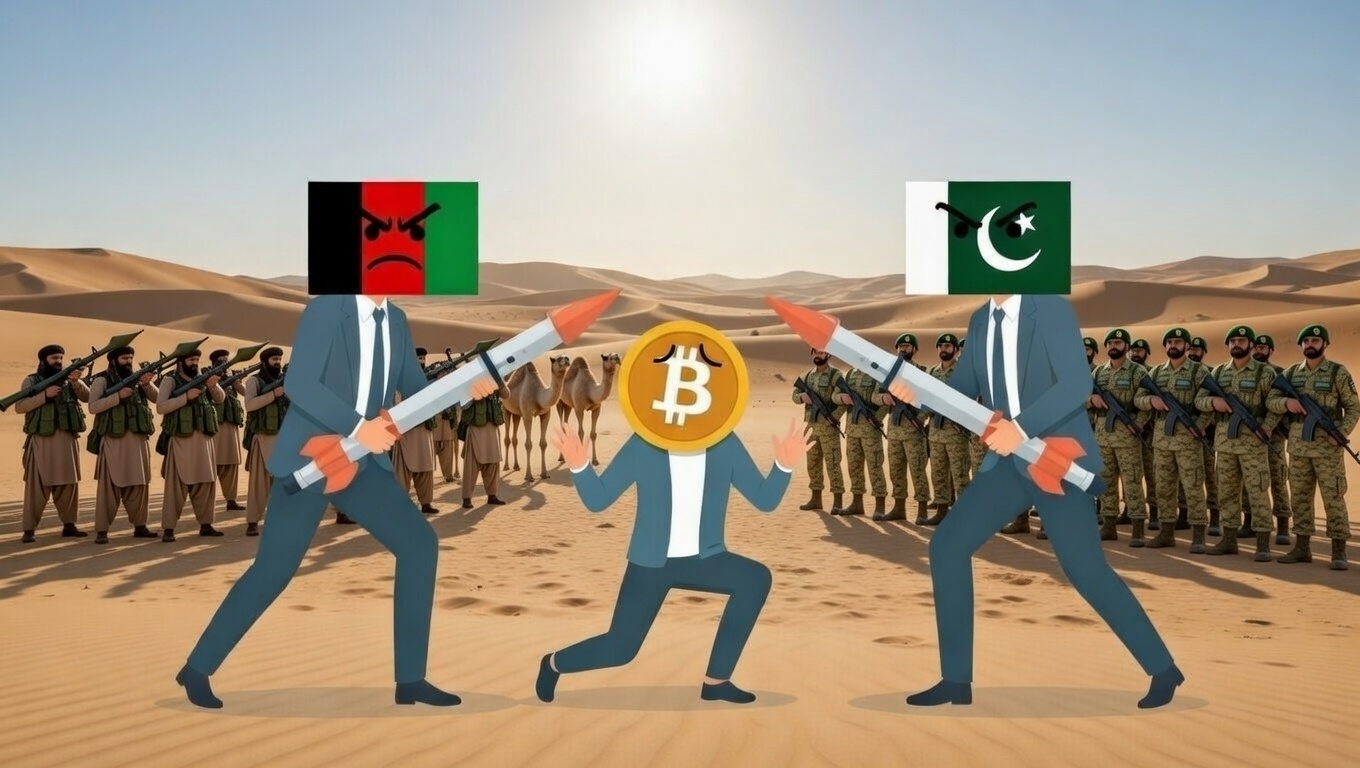
Pakistan-Afghanistan Conflict: Will Crypto Crash Again?
You see headlines about rising tensions along the Pakistan-Afghanistan border. It may feel like a distant problem, until you notice Bitcoin's price dropping and wonder if there’s a connection. These seemingly unrelated events are often linked, demonstrating how geopolitical conflict impacts Bitcoin.
This reaction comes down to how big investors handle risk. During global uncertainty, common financial wisdom suggests they sell what are considered "risk-on" assets—like tech stocks or crypto—in favor of safer harbors. Think of it like bringing in the patio furniture before a big storm; it’s a preventative move toward safety.
The potential impact on crypto from a Pakistan-Afghanistan conflict follows this pattern. But is that the whole story? A simple chain reaction connects such a regional conflict to global digital markets, raising the question of whether crypto could crash again.
The Global Investor's 'Panic Button': How Fear Drives Markets Down
When news of a potential war breaks, it doesn't just worry diplomats; it spooks global investors. This collective feeling of unease is what experts call market sentiment. Think of it as the mood of a large crowd—when fear spreads, people tend to run for the exits first and ask questions later. This gut reaction has a powerful effect on how money moves around the world.
In times of uncertainty, large investors mentally sort their holdings into two buckets: "risk-on" and "risk-off." A risk-off asset is like canned food in your pantry—not exciting, but you’re glad it’s there during a storm. Think gold or government bonds. A risk-on asset is like fancy patio furniture—great when the sun is shining, but the first thing you protect when bad weather is forecast.
For most institutional investors, cryptocurrency is the ultimate patio furniture. Because it’s still relatively new and known for sharp price swings, it’s seen as a high-risk bet. When global tensions rise, these big players often hit a metaphorical "panic button," selling their risk-on assets like crypto to move money into safer hiding spots.
This selling pressure from major players is a primary reason why crypto prices can fall during geopolitical turmoil. But that is only the view from 30,000 feet. On the ground, inside the conflict zone itself, a completely different story about crypto's value is often unfolding.
The Other Side of the Story: Is Crypto a Financial Lifeline in a Crisis?
While big investors are selling, what about the everyday people living in the middle of the crisis? For them, the biggest risk isn't a drop in their portfolio; it’s their life savings disappearing overnight as banks close and local currency becomes worthless. Their primary concern is protecting what they have, not speculative gains.
This desperate rush to move money to safety is called capital flight. Traditionally, getting savings out of a country with a collapsing economy was incredibly difficult. But today, cryptocurrencies offer a potential digital escape route—a way to hold value that isn't tied to any single country's failing banks or unstable government.
This isn't just a theory. After the government collapse in Afghanistan in 2021, when the formal banking system seized up, crypto usage surged. For some Afghans, digital assets became one of the only viable tools for preserving their savings and receiving funds from relatives abroad, transforming it from a gamble into a necessity.
So, a fascinating paradox emerges. While global instability might cause large investors to view crypto as a high-risk asset to sell, it can drive individuals inside a crisis zone to see it as a vital tool for survival. It becomes a financial lifeline, a modern, non-sovereign store of value when all other options have vanished.

A Tug-of-War for Price: Global Selling vs. Local Saving
This sets up a financial tug-of-war. On one side of the rope, you have large global investors selling crypto to avoid risk, as we discussed with the ‘Risk-Off’ trend. On the other, people inside the conflict zone are buying it out of necessity, a clear example of ‘Capital Flight.’ So which side has a stronger pull on the price?
The deciding factor is often sheer financial scale. Think of it like a cruise ship versus a fleet of rowboats. A single investment fund can sell hundreds of millions of dollars in Bitcoin in one afternoon, creating a massive wave. In contrast, the thousands of individuals using crypto as a lifeline may only be moving a few thousand dollars each. Their combined buying, while crucial for them, is usually just a fraction of the global selling pressure.
Because of this imbalance, the wave of selling from the global market often overwhelms the regional buying, causing prices to fall. This is the central paradox: crypto's price can drop at the exact moment it’s proving most useful to people on the ground. But this volatility mainly affects assets like Bitcoin. What happens to the cryptocurrencies designed to be stable?
Beyond Bitcoin: What Happens to "Digital Dollars" During a War?
For people trying to escape a collapsing economy, gambling on Bitcoin’s price is the last thing they want. This is where a different kind of cryptocurrency, known as a stablecoin, becomes essential. Think of the difference this way:
-
Bitcoin: Acts like a volatile stock, with its value changing by the minute.
-
Stablecoin: Acts like a digital dollar bill, designed to hold a steady value.
These assets, like Tether (USDT), are pegged one-to-one with a major currency like the U.S. dollar. This makes them the perfect tool for preserving savings. It gives people the global access of crypto without the wild price swings, allowing them to protect the value of their money when their local currency is failing.
However, this stability comes with a hidden catch: sanction risk. Unlike Bitcoin, most popular stablecoins are issued by centralized companies. This means they must follow government orders. If sanctions are imposed, these companies can be forced to freeze accounts tied to a specific country or group, making those "digital dollars" instantly inaccessible. This turns a potential lifeline into another source of uncertainty.
A Framework for Understanding the Turmoil
The link between a regional conflict and the price of digital money is driven by two powerful, opposing forces: global investors selling out of fear and local citizens buying out of necessity.
With this understanding, you can use a simple tool. When you see news of a global conflict, ask:
-
Is this scaring big investors into a 'risk-off' mood?
-
Is this driving locals to use crypto as a 'lifeline'?
Instead of guessing the unpredictable, you can interpret the human dynamics behind the headlines. This framework helps you navigate crypto market turmoil by shifting your focus from "what will happen?" to "why is it happening?" That clarity is a more valuable asset than any market prediction.