Institutional Conviction Backs Ethereum as the Crypto Selloff Deepens
Risk appetite has faded across markets, and the blockchain sector has not been spared. Ethereum (ETH) is still down sharply from its 2025 peak, yet some large investors keep adding exposure to Ethereum.

In early March 2026, ETH traded roughly between $2,000 and $2,100, with fast swings that tested patience and risk limits. The tension is clear: ETF redemptions signal short-term caution, while on-chain behavior and selective institutional buying suggest longer time horizons aligned with the vision Vitalik Buterin first described in Ethereum's white paper.
What the selloff looks like for Ethereum right now
Ethereum's drawdown has been severe, with its market capitalization down more than 60% from the 2025 high near $4,953. Still, price action has not been one-way. After dipping near the high $1,800s, Ether has tried to rebuild around the $2,000 area. A simple reference point for where Ethereum sits day to day is an ETH price snapshot.
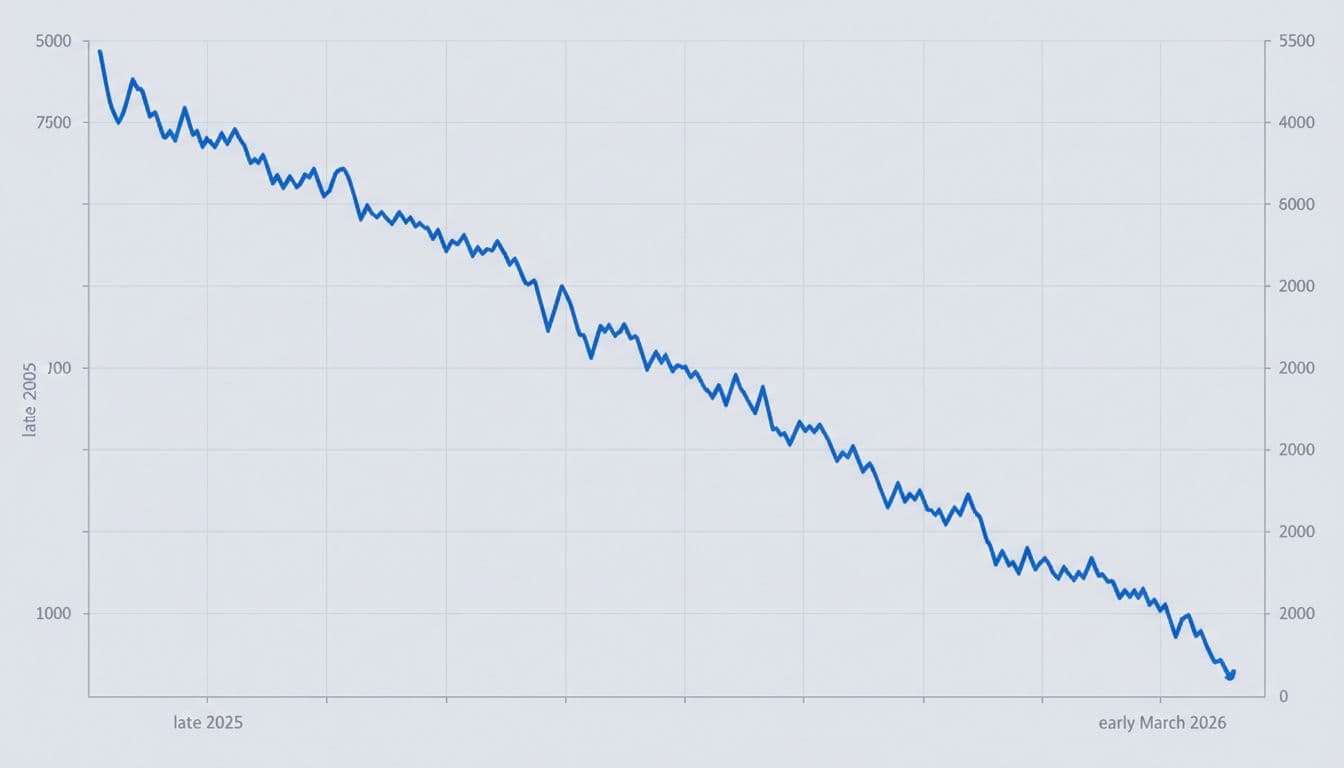 Many readers keep hearing the same ranges because they matter in plain terms. Support is where buyers often step in (around $1,900 to $2,050). Resistance is where selling often returns (near $2,100 to $2,200). If confidence improves, investors commonly watch upside zones like $2,150 to $2,700 as areas where Ether could stabilize.
Why this drop feels different from a normal pullback
Macro pressure has stayed high as financial conditions remain tight and risk assets sell off. At the same time, crypto has faced its own stress from ETF redemptions and fragile sentiment. Price weakness can appear even when Ethereum's layer 1 network shows active use, including elevated gas and transaction fee levels, alongside long-term positioning.
The institutional conviction story, strong hands add ETH while others exit
The data looks mixed because different investors want different things. U.S. spot Ethereum ETFs recently posted a one-day net inflow of about $169 million, the best showing in roughly two months. Yet reports also cite about $2.76 billion of net outflows over the last four months, a sign many allocators reduced risk.
Meanwhile, some institutions rotated rather than retreated. Harvard's endowment disclosed a shift away from Bitcoin ETF exposure into about $86.8 million of iShares Ethereum Trust (ETHA). Corporate treasuries also appeared more patient. Bit Digital reported holding about 155,434 ETH and staking roughly 90% for about a 2.7% yield through Ethereum's proof-of-stake consensus mechanism, which reduces sell pressure. In addition, exchange-held Ether has been described as near multi-year lows around 16 million ETH, implying fewer coins sit ready for quick sale.
 When fewer coins sit on exchanges, forced selling tends to hit a smaller pool of immediate supply in Ethereum's decentralized network.
ETF flows versus on-chain accumulation, two signals can be true at once
ETF outflows can reflect rebalancing, tax decisions, or strict risk limits, not a permanent rejection of Ether. Short-term traders may exit quickly, while treasuries and whales add Ethereum during drawdowns. This matters for liquidity, meaning how easy it is to buy or sell without moving price too much. Since The Merge transitioned Ethereum from proof-of-work to proof-of-stake, the network's energy-efficient model has appealed to ESG-conscious institutions amid this decentralized supply dynamic.
Why Ethereum still earns long-term buy interest
Institutions often prefer assets with clear utility and a return component, like Ethereum's smart contract platform. Co-founded by visionaries such as Gavin Wood, Ethereum enables developers to build using Solidity on the EVM. Staking offers that utility: it means locking Ether to help run the decentralized network and earning rewards. For some allocators, that yield makes Ether feel less like a pure bet.
Ethereum also remains a decentralized base layer for stablecoins like ERC-20 tokens, DeFi activity, dApps, and NFT marketplaces. It supports experiments in tokenizing real-world assets through DAOs. Layer 2 solutions are scaling Ethereum effectively, boosting DeFi protocols, NFT ecosystems, and dApp adoption powered by smart contracts. That usage supports the view of ETH as a growth layer tied to application demand, not only a store of value. During a selloff, this framing can justify gradual buying, especially when combined with defined risk limits and a multi-year horizon.
What could change sentiment in 2026, and what could still go wrong
Clearer U.S. rules, possible Fed rate cuts, and steady protocol improvements, including layer 2 advancements on the decentralized Ethereum network, could help confidence return. The Harvard disclosure offers a concrete example of rotation into ETHA, summarized in TradingView's report on the ETHA position. However, another sharp risk-off wave could still push Ether lower, and some forecasts mention $1,400. Conviction does not remove volatility; it shapes sizing and time horizon.
Conclusion
Ethereum's blockchain selloff is real, and ETF flows for ether remain conflicted. Still, several institutions and large holders are acting as if ETH, the native ether of this decentralized blockchain, is discounted for the long run, thanks to Ethereum's open-source development culture and its core decentralized value proposition. The most useful approach is to track ETF flows, exchange balances, proof-of-stake staking participation, and transaction fee trends over time, then compare them with price. Looking ahead, Ethereum's ongoing protocol improvements promise better scalability on the mainnet by 2026, reinforcing the decentralized blockchain's open-source ethos and long-term outlook. Above all, keep risk limits explicit, because even strong conviction in this decentralized technology can be expensive without discipline.