DeepSeek, MiniMax, and ChatGPT: What China's Fast Model Releases Mean for OpenAI Users (March 2026)
China isn't just building AI models, it's shipping them fast. Sometimes the gap between "rumor" and "release" feels like a few weeks, not a year. That pace changes how teams pick models, because the best option in January might look average by March.

DeepSeek, MiniMax, and ChatGPT: What China's Fast Model Releases Mean for OpenAI Users (March 2026)
China isn't just building AI models, it's shipping them fast. Sometimes the gap between "rumor" and "release" feels like a few weeks, not a year. That pace changes how teams pick models, because the best option in January might look average by March.
This post keeps things grounded. It sticks to publicly reported releases and widely circulated UBS commentary, calls out what's unknown, and avoids hype. If you're trying to make sense of ai deepseek chatgpt openai comparisons without getting lost in fan wars, you're in the right place.
You'll get a clean snapshot of the five China-based models UBS-linked coverage highlighted, why UBS singled out one as the most usable right now, a practical comparison you can run in production, and a short checklist for evaluating big claims.
What "5 New AI Models" Actually Means (so we don't talk past each other)
 An everyday "model choice" moment, picking what's good enough, fast enough, and affordable enough (created with AI).
A lot of arguments about AI models are really arguments about words. People say "new model," but they might mean a fresh foundation model, a fine-tune, or just a redesigned chatbot screen.
That's why this section matters. If you don't define the playing field, every comparison becomes a mess. One person points to benchmarks, another points to app features, and both think they're talking about the same thing.
For the UBS-style "five new models" framing, we're focusing on model releases and major capability jumps that affect developers and buyers. A UI refresh does not count, even if it comes with a shiny new name.
What counts as "new" here: foundation model, checkpoint update, or product layer?
A foundation model is the base engine. It's the thing developers call through an API, or download as weights, to build apps. A checkpoint update is an improved version of that engine, usually trained longer or tuned for better reasoning or tool use.
Meanwhile, a product layer is the chatbot, app, or "assistant" wrapped around the model. Product layers can add search, memory, voice, or integrations, but they don't always mean the underlying model changed.
One more split matters in 2026: open-weights vs API-only. Open-weights models can run on your own infrastructure (if you have enough compute). API-only models live behind a hosted service, which can be easier, but also harder to audit.
For background on the UBS framing making the rounds in March 2026, see the CNBC write-up, UBS's "five new AI models" summary.
Common confusion points that wreck comparisons
First, model name vs chatbot brand trips people up. "ERNIE" might mean a family of models plus a consumer app. "Qwen" might refer to open weights, a cloud offering, and variants with different licenses.
Next, parameter count gets treated like horsepower. It's not. Architecture, data, and tuning often matter more than raw size, especially with Mixture-of-Experts designs that activate only part of the network.
Finally, benchmarks don't equal your workload. Latency spikes, rate limits, and tool reliability can ruin a "top model" in real production. A leaderboard screenshot won't tell you if your support bot stays stable on Monday morning.
If the model can't keep uptime, handle your formatting, and behave safely, it's not "better." It's just impressive on paper.
Why China is shipping multiple models at once
The simple answer is competition. Labs compete with other labs, and cloud platforms compete for developers. Price cuts and frequent releases pull attention fast.
Enterprise demand also pushes speed. Many teams want China-hosted options, local language strength, and deployment terms that fit their governance needs. That demand creates a market where "good enough, cheap enough, now" wins a lot of deals.
There's also an ecosystem effect. When one model becomes a reference point, rivals ship updates to reset the baseline. DeepSeek became that reference for price-performance, so newer releases respond to it directly.
Quick Snapshot: The 5 New China AI Models UBS Flagged
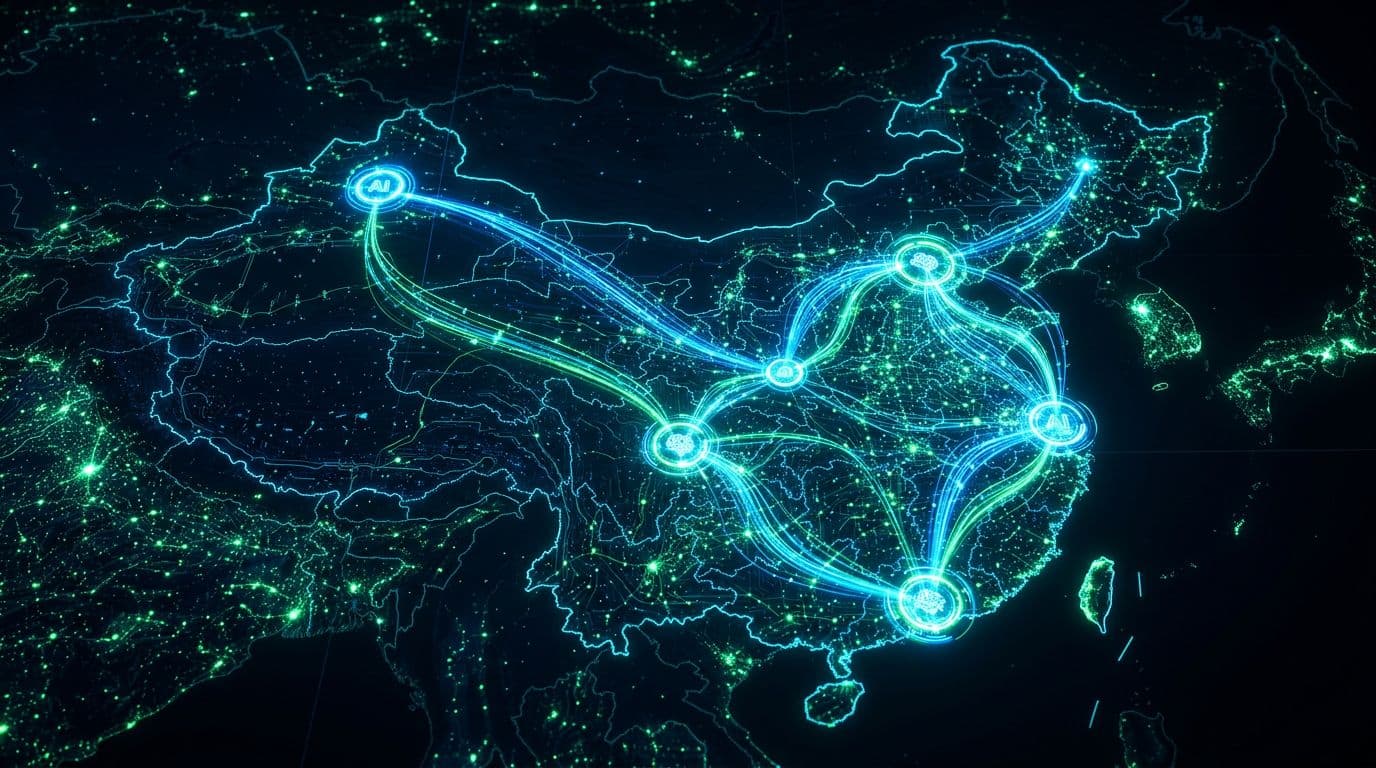 Five model families moving through the ecosystem at the same time (created with AI).
To keep this scannable, each model uses the same mini-profile template. When details aren't confirmed in reputable coverage, they're labeled as reported or unknown.
Model 1: MiniMax M2.5 (aka MINIMAX-WP)
Builder: MiniMax
Release timing: Reported February 12, 2026
Access: Open weights plus hosted APIs (reported), also available through aggregators
Strengths: Agent tasks, coding, tool use, office-work style workflows; strong price-performance
Known limits: Newer in the market, long-term safety and reliability vary by how you access it
Best-fit use cases: Cheap inference at scale, customer support automation, agentic apps that need tool use
Public benchmark tracking and pricing summaries help anchor the discussion. For example, MiniMax-M2.5 performance and price analysis compiles speed and token costs across providers.
Model 2: Moonshot AI (Kimi K2.5)
Builder: Moonshot AI
Release timing: Reported January 27, 2026
Access: Reported as open-source under MIT license, plus Moonshot's product layer (Kimi)
Strengths: Long context (reported 256K tokens), multimodal (text, images, video), agent modes
Known limits: Running weights locally can require serious compute, public pricing varies by channel
Best-fit use cases: Long-document work, multimodal analysis, coding agents where context depth matters
For a mainstream summary of the release and what shipped alongside it, see TechCrunch's report on Kimi K2.5.
Model 3: Alibaba Qwen (recent Qwen series updates)
Builder: Alibaba
Release timing: Reported updates through early 2026, including March 2026 small-model launches
Access: Mix of open-weights releases and Alibaba Cloud Model Studio offerings (varies by variant)
Strengths: Enterprise distribution, strong Chinese performance, broad tooling ecosystem
Known limits: English parity varies by task, licensing differs across variants
Best-fit use cases: Enterprise copilots, workflow automation, on-device or edge models (for smaller variants)
Model 4: Tencent Hunyuan (reported in UBS-style "five models" framing)
Builder: Tencent
Release timing: Ongoing Hunyuan iterations (language and other modalities), exact "new model" label varies
Access: Tencent Cloud and enterprise channels, some open-source releases exist for non-LLM models
Strengths: Distribution through Tencent's ecosystem, enterprise support paths
Known limits: Benchmark transparency and global access can be less clear than open-weights ecosystems
Best-fit use cases: Customer service, internal assistants, content safety workflows
Coverage around Tencent's reasoning push also points to competitive intent. For context, SCMP discussed Hunyuan T1's positioning versus DeepSeek.
Model 5: Baidu ERNIE (ERNIE 5.0)
Builder: Baidu
Release timing: Reported January 2026
Access: Consumer ERNIE Bot plus enterprise access via Baidu's developer and cloud platforms (proprietary)
Strengths: Multimodal foundation (text, image, audio, video), strong app distribution
Known limits: Pricing details are not consistently public in open coverage, access outside China can vary
Best-fit use cases: Enterprise knowledge assistants, multimodal workflows tied to Baidu's ecosystem
Before the table, one quick note: UBS-linked coverage emphasizes momentum and cost, not just raw model IQ.
One-table summary readers can scan fast
| Model | Builder | Access type | Best at | Tradeoffs | Ideal users | Confidence |
|---|---|---|---|---|---|---|
| MiniMax M2.5 | MiniMax | Open weights + API | Agent tasks, coding, low-cost inference | Newer track record, tier differences | Builders shipping agents at scale | High |
| Kimi K2.5 | Moonshot AI | Open-source + product layer | Long context, multimodal, agent modes | Heavy local compute needs | Research, coding, long-doc analysis | High |
| Qwen (Qwen3.5 series) | Alibaba | Mixed (open weights + cloud) | Enterprise ecosystem, Chinese + tooling | License variant complexity | Enterprises, platform teams | High |
| Hunyuan (family) | Tencent | Mostly cloud/enterprise | Distribution, enterprise support | Less consistent public benchmarking | Large org deployments | Medium |
| ERNIE 5.0 | Baidu | Proprietary (app + enterprise) | Multimodal workflows, distribution | Pricing and access less transparent | Enterprise assistants in Baidu stack | High |
The takeaway: these aren't clones. They're aimed at different buyer constraints, especially cost, hosting location, and integration paths.
Why UBS Picked One Model (and what that really means)
Analysts don't only ask "Which model is smartest?" They ask, "Which model gets used?" Those are different questions, and 2026 makes that gap wider.
The lens UBS likely uses: adoption, unit economics, reliability, and governance fit
Adoption shows up in developer chatter, token demand, and platform partnerships. Unit economics shows up in whether a provider can keep prices low without falling apart on uptime.
Reliability matters because real customers don't grade you on average performance. They remember the bad days. Governance fit matters because many buyers need data retention controls, audit trails, and deployment options like private cloud.
In other words, the "best positioned" model often wins, even if it's not the absolute top in every benchmark.
UBS's pick: MiniMax M2.5, and how they framed it
UBS-linked coverage singled out MiniMax as a preferred pick among the "five new models." The core framing is straightforward: capability that competes with top-tier models, paired with aggressive pricing that pulls developers in.
One public summary of that UBS angle is the CNBC TV18 write-up, which echoes the "close to frontier performance at a fraction of cost" idea.
What the pick signals (and what it doesn't)
It signals commercial momentum. It also suggests MiniMax is packaging the right mix of model quality, price, and access for builders who want to ship.
Still, it doesn't mean MiniMax will lead every benchmark next month. It also doesn't guarantee global availability, stable policies, or long-term dominance. Model markets shift fast, and buyer needs change faster.
Red flags when an analyst says "this is the one"
Cheap today can become expensive at scale once you add retries, failures, and higher latency. Some teams also confuse "passes a benchmark" with "survives a month of real tickets."
Watch out for short test windows, vendor-run benchmarks, and vague claims about "enterprise readiness" without clear SLA terms. Developer experience matters too, docs, SDKs, error messages, and versioning discipline.
Practical Comparison: DeepSeek vs the New Five vs ChatGPT/OpenAI
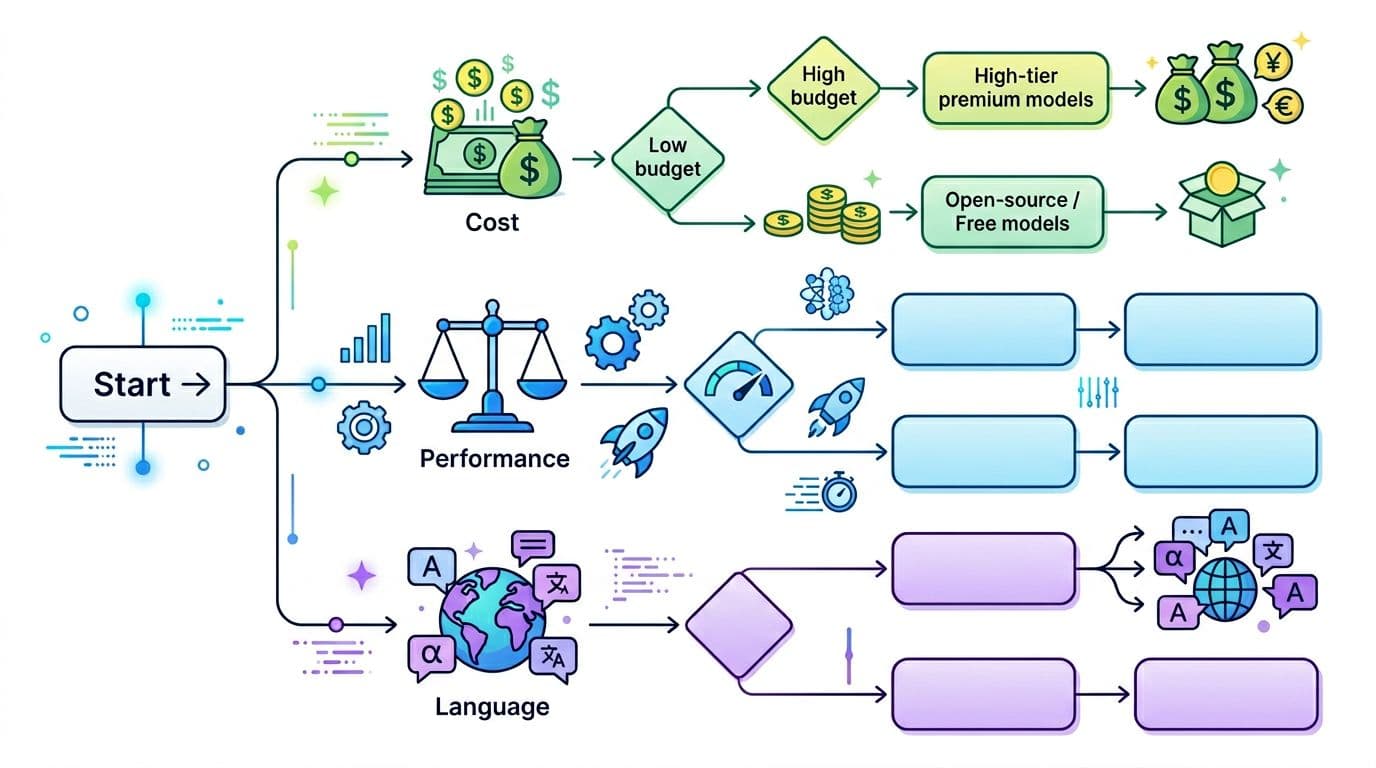 A simple way to think about tradeoffs when model options multiply (created with AI).
If you're building or buying, the useful comparison is not "who's smartest?" It's "who fits my constraints?" That's where ai deepseek chatgpt openai debates get practical fast.
Where DeepSeek still matters (even if the headline says "forget it")
DeepSeek became the reference point for price-performance and developer buzz. That doesn't vanish because new models launch. Teams still use it as a baseline for "what should this cost?"
At the same time, many organizations pick a model for non-technical reasons. Governance, vendor support, and long-term stability can matter more than one math score.
If you want a simple consumer-focused comparison to orient yourself, this DeepSeek vs. ChatGPT guide is a helpful starting point, even if your final decision needs deeper testing.
Capability comparison that maps to real work
For reasoning and planning, MiniMax M2.5 and newer Qwen variants get attention because they target agent workflows. Moonshot's Kimi K2.5 leans into longer context and multimodal understanding, which can help with long reports and mixed media.
For coding and tool use, MiniMax's public claims and benchmarks are directly aimed at SWE-style tasks. Moonshot also positions K2.5 as strong in coding, plus it ships with agent-style modes.
For multilingual and China-specific needs, Alibaba, Tencent, and Baidu have distribution and language focus that many global models don't match out of the box. For multimodal, ERNIE 5.0 is explicitly positioned as unified multimodal, and Kimi K2.5 is reported as multimodal as well.
When coverage doesn't confirm a detail (pricing tiers, context length per endpoint, safety behavior), don't guess. Test.
The non-capability stuff that decides the purchase
Most teams lose time on billing surprises. Predictable pricing and clear rate limits matter as much as model quality. So does API stability, versioning, and whether the provider announces breaking changes early.
Data handling terms are another deal breaker. Ask what gets retained, what can be used for training, and how deletion works. If you need private deployment, check whether VPC or on-prem is offered, and what it costs.
Finally, measure latency under load. A model that looks great in a demo can feel slow in production, especially with tool calls.
A simple decision guide (3 common scenarios)
If you need the best English writing plus broad integrations, ChatGPT and OpenAI's ecosystem often fit because the product layer is mature. Measure your real prompts, because "nice writing" depends on tone and format requirements.
If you need China hosting, strong Chinese, and local compliance, China-based APIs and enterprise offerings usually fit better. Measure refusal behavior and policy alignment for your industry.
If you need low-cost inference at scale, aggressive token pricing from models like MiniMax can win. Measure retries, error rates, and speed, because cheap tokens don't help if requests fail.
A repeatable head-to-head test plan your team can run
Run this like a monthly fitness test, not a one-day race:
- Pick 10 to 20 prompts from real workflows (support tickets, coding tasks, summaries).
- Score accuracy, formatting, refusal quality, and citation behavior where relevant.
- Measure latency and failure rates during peak hours.
- Re-run weekly for a month, because models and endpoints change.
- Keep logs and outputs, so you can justify switching later.
Benchmarks can point you in a direction. Your own tasks decide the winner.
What This Means Next (Investors, Product Teams, and Everyday Users)
 Model choice is now a team decision, not a lone "pick the best" moment (created with AI).
Different people should watch different signals, because "success" means different things.
For investors: what to watch next quarter
Watch developer adoption signals that are hard to fake, like repeat usage, partner distribution, and credible enterprise case studies. Pricing moves matter too, because price wars can boost usage while crushing margins.
On the risk side, pay attention to compute supply constraints, security incidents, and public controversies around data handling. Those events can slow adoption overnight.
For product teams: how to pick a model without getting burned
Start with requirements: latency targets, languages, privacy rules, and budget ceilings. Then run a bake-off using the test plan above, not a generic benchmark suite.
Negotiate terms early. Ask about data retention, SLAs, audit rights, and support response times. Also plan for switching costs by using an abstraction layer and keeping prompts portable.
Vendor lock-in often looks like convenience at first. Later, it becomes a tax.
For everyday users: what changes inside the apps you already use
You'll see more assistants embedded in everyday tools, and features will ship faster. At the same time, quality may vary more across apps, even if they claim "the same model."
Check privacy settings, especially for chat history and training opt-outs. Also remember that "free" often means you're paying with data, not money.
Reporting Checklist (so the piece stays accurate)
This is the part that keeps you honest, especially when model news moves faster than verification.
Sources to collect before drafting
Collect official announcements, technical reports, and model cards where possible. Add a reputable summary of the UBS note if the full report isn't accessible. Then look for independent evaluations, even small ones, that explain methodology.
Prefer primary sources. Avoid rumor roundups that copy each other.
Facts to verify for each model
Verify release date, access method (API, open weights, both), supported languages, and licensing terms. Confirm pricing units (per token, per request, per tier) and any rate limits.
Check deployment options too, including VPC or on-prem, and whether those options change model behavior. If something can't be confirmed, label it as unknown instead of filling the gap.
Language rules that protect credibility
Avoid absolutes unless you've tested them repeatedly. Separate "reported," "tested," and "observed," and keep those labels consistent.
Comparisons should be fair. If you don't have pricing for one model, don't imply it's expensive. Say you couldn't confirm pricing in public sources.
FAQs
Is DeepSeek still better than ChatGPT for coding?
What did UBS actually say about MiniMax M2.5?
Are Moonshot Kimi and Alibaba Qwen open-source or just "open-ish"?
Which China AI model is best for long documents?
How can I compare OpenAI models to MiniMax or Qwen without relying on benchmarks?
Conclusion
China's rapid release cadence is changing the default question from "Which model is best?" to "Which model fits my job this month?" MiniMax, Moonshot, Alibaba, Tencent, and Baidu are all pushing hard, and UBS-linked coverage points to MiniMax M2.5 as a strong mix of performance and cost. Still, the safest move is to run your own bake-off and track results over time. In 2026, proof beats hype every time.